前回は「対米覚書”MEMORANDUM”英文全文〜「遺憾とする」=”regrets to”・規定「宣戦布告事前通告時間」・「一分前でもOK」とギリギリ〜」の話でした。

「開戦三十分前」をゴリ押しした軍令部:「薄氷踏む思い」対米宣戦布告
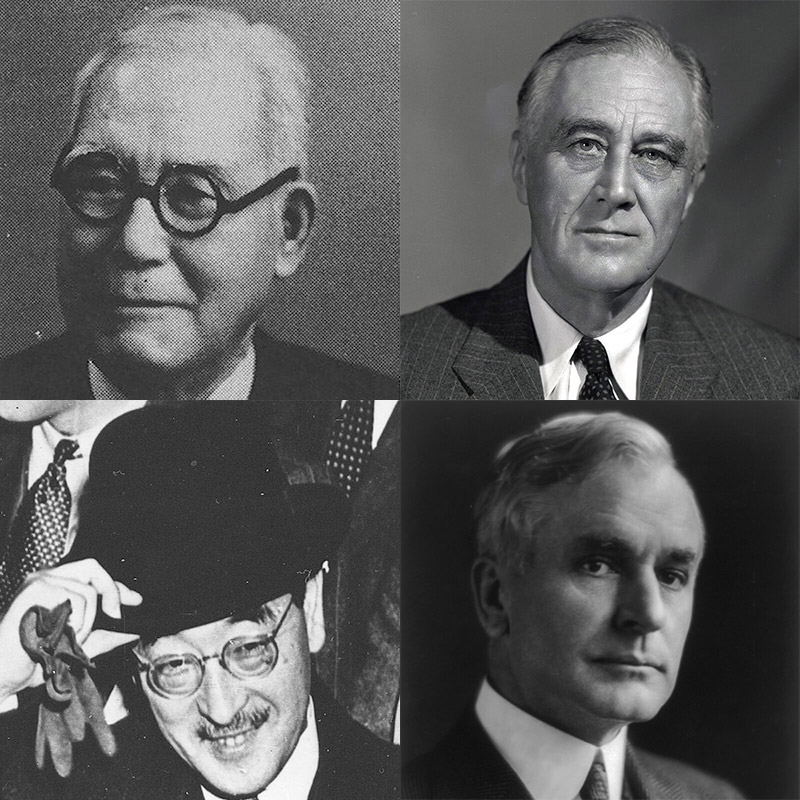
そして、いよいよ1941年12月1日、大日本帝国は、対米戦争開戦を御前会議で正式決定しました。
問題は、「いつ、どのように戦争を開始するか」でした。
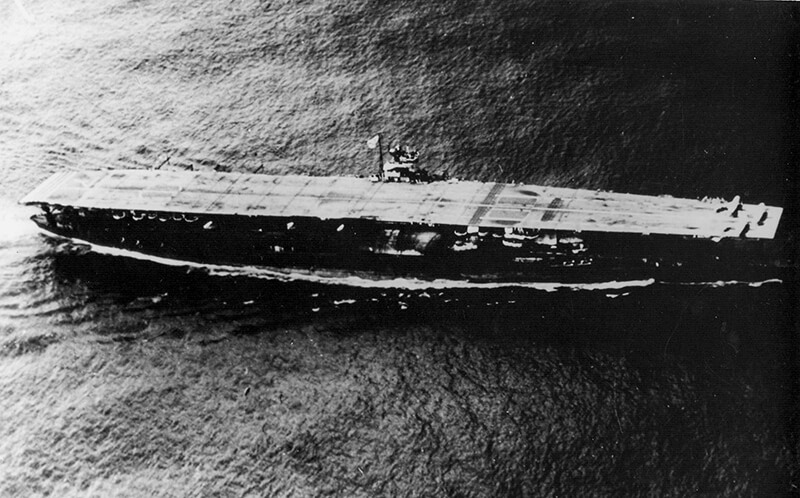
この頃、空母赤城を旗艦とする第一航空艦隊は、一路ハワイ向けてひたひたと迫っていました。
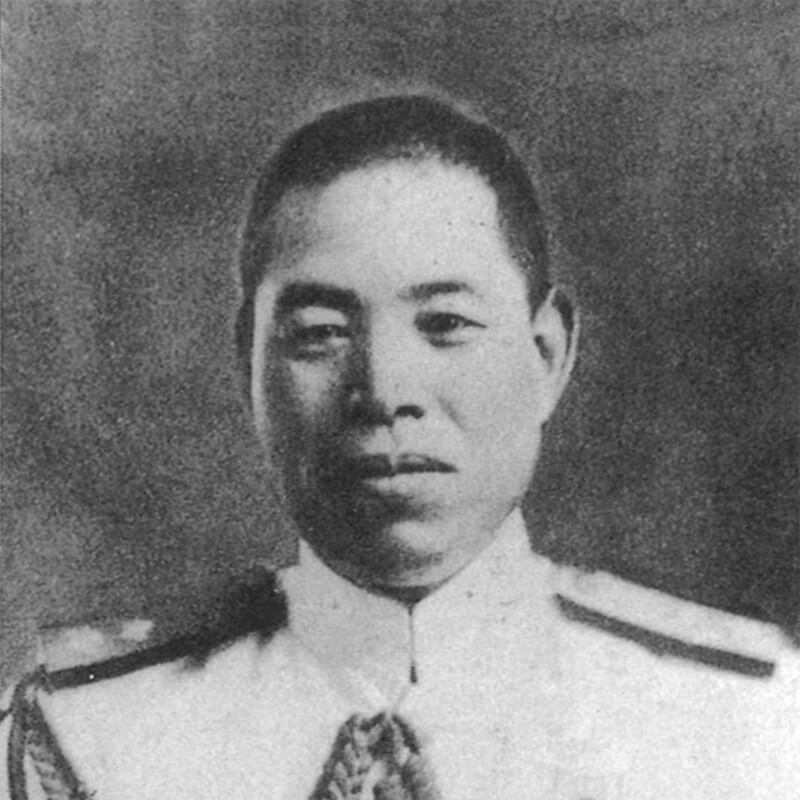 伊藤整一
伊藤整一統帥部においては、既に定めた時刻を
更に三十分繰り下げる必要があることを発見したから、
伊藤整一之に同意して
欲しい。
そして、陸海軍統帥部は、軍令部が押し切る形で「三十分前の宣戦布告」と決定しました。
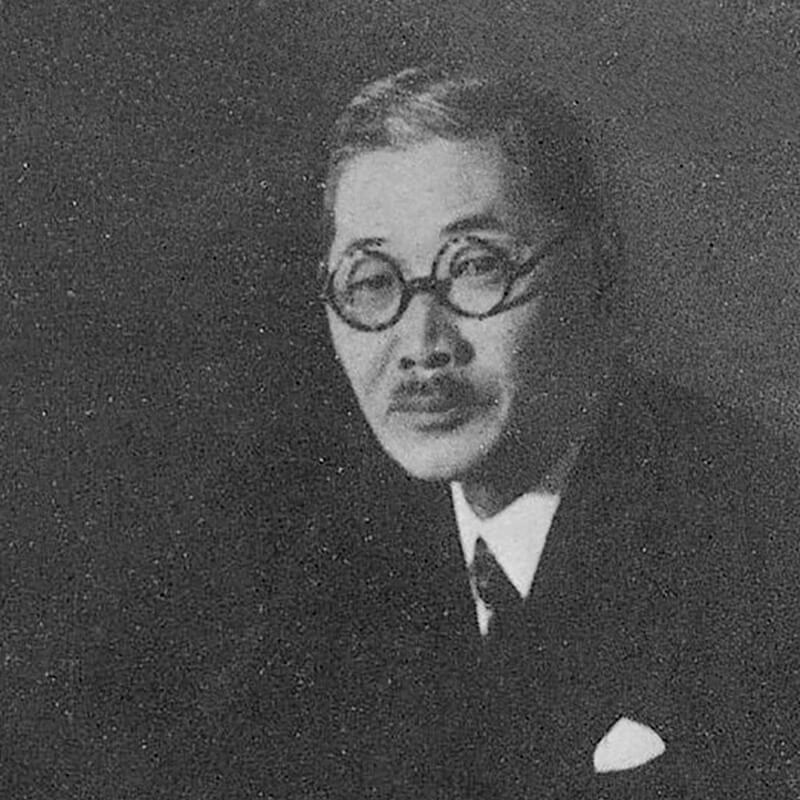 東郷茂徳
東郷茂徳依而予は午前一時に変更しても
攻撃開始まで十分の余裕があるのか、と質したら、
伊藤整一その
通りです。
伊藤整一我が方通告が在米大使館にあまり早く
発電されないように願います。
顔つきからして「バリバリの優等生」であった伊藤整一次長でしたが、この頃は、無理に無理を重ねるようなことを主張し続けました。
Japan Center for Asian Historical Records, National Archives of Japan
MEMORANDUM
I. The government of Japan, prompted by a genuine desire to come to an amicable understanding with the Government of the United States in order that the two countries by their joint efforts may secure the peace of the Pacific area and thereby contribute toward the realization of world peace, has continued negotiations with the utmost sincerity since April last with the Government of the United States regarding the adjustment and advancement of Japanese-American relations and the stabilization of the Pacific Area.
The Japanese Government has the honor to state frankly its views concerning the claims the American Government has persistently maintained as well as the measure the United States and Great Britain have taken toward Japan during these eight months.
II. It is the immutable policy of the Japanese Government to insure the stability of East Asia and to promote world peace, and thereby to enable all nations to find each its proper place in the world.
Ever since the China Affair broke out owing to the failure on the part of China to comprehend Japan’s true intentions, the Japanese Government has striven for the restoration of peace and it has consistently exerted its best efforts to prevent the extension of war-like disturbances. It was also to that end that in September last year Japan concluded the Tripartite Pace with Germany and Italy.
However, both the United States and Great Britain have resorted to every possible measure to assist the Chungking regime so as to obstruct the establishment of a general peace between Japan and China, interfering with Japan’s constructive endeavours toward the stabilization of East Asia. Exerting pressure on the Netherlands East Indies, or menacing French Indo-China, they have attempted to frustrate Japan’s aspiration to realize the ideal of common prosperity in cooperation with these regimes. Furthermore, when Japan in accordance with its Protocol with France took measures of joint defense of French Indo-China, both American and British Governments, willfully misinterpreting it as a threat to their own possessions and inducing the Netherlands Government to follow suit, they enforced the assets freezing order, thus severing economic relations with Japan. While manifesting thus an obviously hostile attitude, these countries have strengthened their military preparations perfecting an encirclement of Japan, and have brought about a situation which endangers the very existence of the Empire.
Nevertheless, to facilitate a speedy settlement, the Premier of Japan proposed, in August last, to meet the President of the United States for a discussion of important problems between the two countries covering the entire Pacific area. However, the American Government, while accepting in principle the Japanese proposal, insisted that the meeting should take place after an agreement of view had been reached on fundamental and essential questions.
III. Subsequently, on September 25th the Japanese Government submitted a proposal based on the formula proposed by the American Government, taking fully into consideration past American claims and also incorporating Japanese views. Repeated discussions proved of no avail in producing readily an agreement of view. The present Cabinet, therefore, submitted a revised proposal, moderating still further the Japanese claims regarding the principal points of difficulty in the negotiation and endeavoured strenuously to reach a settlement. But the American Government, adhering steadfastly to its original assertions, failed to display in the slightest degree a spirit of conciliation. The negotiation made no progress. Thereupon, the Japanese Government, with a view to doing its utmost for averting a crisis in Japanese-American relations, submitted on November 20th still another proposal in order to arrive at an equitable solution of the more essential and urgent questions which, simplifying its previous proposal, stipulated the following points:
(1) The Government of Japan and the United States undertake not to dispatch armed forces into any of the regions, excepting French Indo-China, in the South Eastern Asia and the Southern Pacific area.
(2) Both Governments shall cooperate with a view to securing the acquisition in the Netherlands East Indies of those goods and commodities of which the two countries are in need.
(3) Both Governments mutually undertake to restore commercial relations to those prevailing prior to the freezing of assets.
The Government of the United States shall supply Japan the required quantity of oil.
(4) The Government of the United States undertakes not to resort to measures and actions prejudicial to the endeavours for the restoration of general peace between Japan and China.
(5) The Japanese Government undertakes to withdraw troops now stationed in French Indo-China upon either the restoration of peace between Japan and China or establishment of an equitable peace in the Pacific area; and it is prepared to remove the Japanese troops in the southern part of French Indo-China to the northern part upon the conclusion of the present agreement.
As regards China, the Japanese Government, while expressing its readiness to accept the offer of the President of the United States to act as “introducer” of peace between Japan and China as was previously suggested, asked for an undertaking on the part of the United States to do nothing prejudicial to the restoration of Sino-Japanese peace when the two parties have commenced direct negotiations.
The American Government not only rejected the abovementioned new proposal, but made known its intention to continue its aid to Chiang Kai-shek; and in spite of its suggestion mentioned above, withdrew the offer of the President to act as so-called “introducer” of peace between Japan and China, pleading that time was not yet ripe for it. Finally on November 26th, in an attitude to impose upon the Japanese Government those principles it has persistently maintained, the American Government made a proposal totally ignoring Japanese claims, which is a source of profound regret to the Japanese Government.
IV. From the beginning of the present negotiation the Japanese Government has always maintained an attitude of fairness and moderation, and did its best to reach a settlement, for which it made all possible concessions often in spite of great difficulties. As for the China question which constitutes an important subject of the negotiation, the Japanese Government showed a most conciliatory attitude. As for the principle of non-discrimination in international commerce, advocated by the American Government, the Japanese Government expressed its desire to see the said principle applied throughout the world, and declared that along with the actual practice of this principle in the world, the Japanese Government would endeavour to apply the same in the Pacific area, including China, and made it clear that Japan had no intention of excluding from China economic activities of third Powers pursued on an equitable basis. Furthermore, as regards the question of withdrawing troops from French Indo-China, the Japanese Government even volunteered, as mentioned above, to carry out an immediate evacuation of troops from Southern French Indo-China as a measure of easing the situation. It is presumed that the spirit of conciliation exhibited to the utmost degree by the Japanese Government in all these matters is fully appreciated by the American Government.
On the other hand, the American Government, always holding fast to theories in disregard of realities, and refusing to yield an inch on its impractical principles, cause undue delay in the negotiation. It is difficult to understand this attitude of the American Government and the Japanese Government desires to call the attention of the American Government especially to the following points:
- The American Government advocates in the name of world peace those principles favorable to it and urges upon the Japanese Government the acceptance thereof. The peace of the world may be brought about only by discovering a mutually acceptable formula through recognition of the reality of the situation and mutual appreciation of one another’s position. An attitude such as ignores realities and imposes one’s selfish views upon others will scarcely serve the purpose of facilitating the consummation of negotiations.
Of the various principles put forward by the American Government as a basis of the Japanese-American agreement, there are some which the Japanese Government is ready to accept in principle, but in view of the world’s actual condition it seems only a utopian ideal, on the part of the American Government, to attempt to force their immediate adoption.
Again, the proposal to conclude a multilateral non-aggression pact between Japan, the United States, Great Britain, China, the Soviet Union, the Netherlands, and Thailand, which is patterned after the old concept of collective security, is far removed from the realities of East Asia.
- The American proposal contains a stipulation which states: “Both Governments will agree that no agreement, which either has concluded with any third Powers, shall be interpreted by it in such a way as to conflict with the fundamental purpose of this agreement, the establishment and preservation of peace throughout the Pacific area.” It is presumed that the above provision has been proposed with a view to restrain Japan from fulfilling its obligations under the Tripartite Pact when the United States participates in the war in Europe, and, as such, it cannot be accepted by the Japanese Government.
The American Government, obsessed with its own views and opinions, may be said to be scheming for the extension of the war. While it seeks, on the one hand, to secure its rear by stabilizing the Pacific area, it is engaged, on the other hand, in aiding Great Britain and preparing to attack, in the name of self-defense, Germany and Italy- two Powers that are striving to establish a new order in Europe. Such a policy is totally at variance with the many principles upon which the American Government proposes to found the stability of the Pacific Area through peaceful means.
- Whereas the American Government, under the principles it rigidly upholds, objects to settling international issues through military pressure, it is exercising in conjunction with Great Britain and other nations pressure by economic powers. Recourse to such pressure as a means of dealing with international relations should be condemned as it is at times more inhumane that military pressure.
- It is impossible not to reach the conclusion that the American Government desires to maintain and strengthen, in coalition with Great Britain and other Powers, its dominant position in has hitherto occupied not only in China but in other areas of East Asia. It is a fact of history that the countries of East Asia for the past hundred years or more have been compelled to observe the status quo under the Anglo-American policy of imperialistic exploitation and to sacrifice themselves to the prosperity of the two nations. The Japanese Government cannot tolerate the perpetuation of such a situation since it directly runs counter to Japan’s fundamental policy to enable all nations to enjoy each its proper place in the world.
The stipulation proposed by the American Government relative to French Indo-China is a good exemplification of the above- mentioned American policy. Thus the six countries- Japan, the United States, Great Britain, the Netherlands, China and Thailand- excepting France, should undertake among themselves to respect the territorial integrity and sovereignty of French Indo-China and equality of treatment in trade and commerce would be tantamount to placing that territory under the joint guarantee of the Governments of those six countries. Apart from the fact that such a proposal totally ignores the position of France, it is unacceptable to the Japanese Government in that such an arrangement cannot but be considered as an extension to French Indo-China of a system similar to the Nine Power Treaty structure which is the chief factor responsible for the present predicament of East Asia.
- All the items demanded of Japan by the American Government regarding China such as wholesale evacuation of troops or unconditional application of the principle of non-discrimination in international commerce ignore the actual conditions of China, and are calculated to destroy Japan’s position as the stabilizing factor of East Asia. The attitude of the American Government in demanding Japan not to support militarily, politically or economically any regime other than the regime at Chungking, disregarding thereby the existence of the Nanking Government, shatters the very basis of the present negotiations. This demand of the American Government falling, as it does, in line with its above-mentioned refusal to cease from aiding the Chungking regime, demonstrates clearly the intention of the American Government to obstruct the restoration of normal relations between Japan and China and the return of peace to East Asia.
V. In brief, the American proposal contains certain acceptable items such as those concerning commerce, including the conclusion of a trade agreement, mutual removal of the freezing restrictions, and stabilization of the yen and dollar exchange, or the abolition of extraterritorial rights in China. On the other hand, however, the proposal in question ignores Japan’s sacrifices in the four years of the China Affair, menaces the Empire’s existence itself and disparages its honour and prestige. Therefore, viewed in its entirety, the Japanese Government regrets it cannot accept the proposal as a basis of negotiation.
VI. The Japanese Government, in its desire for an early conclusion of the negotiation, proposed simultaneously with the conclusion of the Japanese-American negotiation, agreements be signed with Great Britain and other interested countries. The proposal was accepted by the American Government. However, since the American Government has made the proposal of November 26th as a result of frequent consultation with Great Britain, Australia, the Netherlands and Chungking, and presumably by catering to the wishes of the Chungking regime in the questions of China, it must be concluded that all these countries are at one with the United States in ignoring Japan’s position.
VII. Obviously it is the intention of the American Government to conspire with Great Britain and other countries to obstruct Japan’s effort toward the establishment of peace through the creation of a new order in East Asia, and especially to preserve Anglo-American rights and interests by keeping Japan and China at war. This intention has been revealed clearly during the course of the present negotiation. Thus, the earnest hope of the Japanese Government to adjust Japanese-American relations and to preserve and promote the peace of the Pacific through cooperation with the American Government has finally been lost.
The Japanese Government regrets to have to notify hereby the American Government that, in view of the attitude of the American Government, it cannot but consider that it is impossible to reach an agreement through further negotiations.
この「三十分前の通告」は、極めて緻密なようである一方で、「机上の空論」でありました。
そのため、大日本帝国は、まさかの「宣戦布告の遅延」という大失態を演じることになります。
「対米宣戦布告」手交遅延の真の実態:大使館員怠慢による「不愉快な事件」
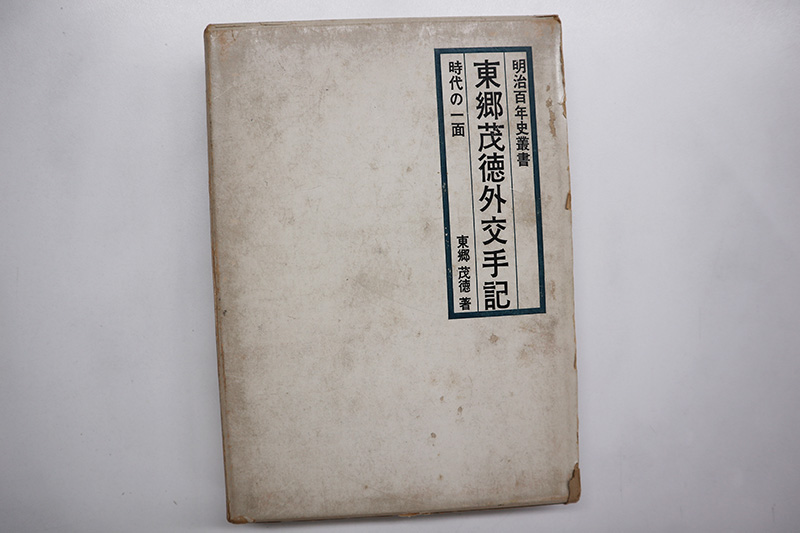
この頃の状況を、開戦時、敗戦時に外務大臣だった東郷茂徳は克明に記録に残しています。
東郷茂徳ただし、ここに今一つ不愉快なる
事件にふれなくてはならない。
東郷茂徳それは、対米通告が
遅延したことである。
いよいよ、ここで「対米通告遅延」に関する事情を東郷茂徳が語り始めました。
東郷茂徳連絡会議において、米国側に
交付する時間が確定したので、
東郷茂徳自分は主管局及び電信課長に
右時刻に在米大使から手交することが
東郷茂徳確実に出来るように発電其他の
手続きを周到なる注意を以て
東郷茂徳行うようにと
指示した。
極めて重大であった対米通告の手続きに対し、統合大臣は「周到なる注意を以て」と命令しました。
東郷茂徳しかして、右の手続きは
右の指示によって確実に行われた。
東郷茂徳それは実施せられた事蹟を検討する方が
最も確実である。
東郷茂徳先づ覚書発送に
先立ち、
以下、東郷大臣は時系列に沿って、対米通告の「本来の流れ」を縷々と説明しました。
一、十二月六日午後対米覚書接到の上は訓令あり次第、何時にても米側へ手交し得る様文書の整理其他万端の手配を了し置く胸の電訓が外務省から在米大使館に発せられた。
二、対米覚書を十二月七日午後一時(以下、華府=ワシントン時間による)に手交すべき旨の訓電は、特に迅速且正確を期するため、二つの路線により発電したとのことであるが、これは七日午前三時三十分に東京中央電信局から発送せられ、
三、本文は之を分ちて十四部年、最後の四、五行の第十四部を除き、六日午前六時三十分より午前十時二十分の間に全部発電せられ、
四、最後の第十四部は、是れ亦正確且迅速を期するため二つの路線で七日午前三時と四時とに発電せられた。
東郷茂徳これが華府(ワシントン)故障なく到達し、
在米日本大使館に配達さられたのである。
東郷茂徳そして、解読及浄書に十分なる時間があったことは、
其後、外務省に於いて取り調べた所でも明らかとなったが、
東郷茂徳東京軍事裁判所でも多数の証言によって
明瞭となった。
東郷茂徳唯、在米大使館員が、七日早暁に到着した電報を
解読するのに幾分の怠慢があったことと、
東郷茂徳且、前夜到着の分を直に「タイプ」せざりし等
浄書の手配りに過失があったことが原因で、
東郷茂徳訓令した時間迄に
浄書が出来なかったのである。
とにかく、在米大使館員は、「全員が怠慢」であった結果、対米宣戦布告の手交が遅延してしまいました。
これが「怠慢」でゆるされるのかどうか。
とにかく、1941年12月6日から7日(ワシントン時間)の在米日本大使館員の「怠慢」の結果、日本国民は、当時から現在に至るまで「卑怯者」と呼ばれることになってしまったのでした。
